Why there is no European Amazon, Google, Uber & Airbnb


When I started my online sales business with the enaA.com website in 1999, there was practically no legislation regulating this field. A grey area. Should I have waited for laws to be adopted in order to know how to work legally?
Seventeen years later and we are still far from having relevant laws in Slovenia which would support the development of online trading. All this in the country which has in the meantime succeeded in legalising same-sex marriages, the 21st country in the world to do so. I am proud of it. Really proud! I have also lived to see cannabis no longer being classified in the illicit drug class that attracts the most severe penalty and is now allowed to be grown and used for medicinal purposes. Slovenia is not exactly among the leading countries here but at least things have moved forward. We put the right to clean drinking water into the constitution.
And although European politicians refer to the development of the digital market as one of the most important generators of European economic growth, we online traders have so far received from them only legislation on web cookies, which has neither increased the volume of online sales in Europe nor improved user experience. Thus one cannot count on European companies to develop and compete with the American Amazon or the Chinese Alibaba. Sales of both companies to customers in EU countries have been growing steeply from year to year. Why? Because the countries of their origin have highly effective solutions regarding copyrights, customer protection, payment transactions and delivery, which allow for exceptionally low cost of selling throughout the world. Let us not forget that we are dealing here with a global retail sale with an average purchase price of about 20 euros in which every cent counts! Billions of contracts with the average value of peanuts. In Slovenia, the profit would already have evaporated during the administrative procedures related to re-export, VAT accounting, arrangement of copyrights and the costs associated with packaging waste and the destruction of electricity devices.
There may actually be only a handful of Slovenian photographers who sell their work on istock.com, yet every day there are more and more businessmen who know how to buy products in China and send them directly to Amazon warehouses in the USA to be re-sold from there. If we add to these Alibaba, eBay, Etsy and other similar online wholesale markets, this is not such a small business any more. But these marketplaces are not located in Europe and so the money goes other way.
Do we have legislation to regulate this? No. Are people who are doing this breaking laws? Not intentionally, for sure. Uber and AirBnB also want to operate their businesses legally. The fact that they are coming on to the market with a new business model should not be an obstacle. Both offer a very transparent operation, much more than, for example, issuing invoices in regular taxis or in renting rooms and suites via tourist associations on the Adriatic coast. Everything is electronic, everything is recorded. It is quite clear what the VAT value is, how much the operator gets and how much goes to the platform administrator. And then the state comes along to say that the business model is not entirely compatible with existing laws and regulations. Understandable. Of course. This is a new thing. We know. Don’t try to make me feel bad for driving with Uber. The sharing economy is an inevitable part of our present and the future. Write a new law. This is your business. The world is evolving! New business models are a constant. Write the best possible law so it will be talked and written about all over the world. Then the EU will become the e-centre of the world.
First published in Finance Manager (version for Slovene readers) http://manager.finance.si/8852131/Aljo%C5%A1a-Domijan-Zakaj-v-Evropi-ne-moremo-narediti-Alibabe-in-Amazona
Selling high-end products requires more thought – even more so online
It seems that our pace of life is much quicker than that of any of the generations before us, and owing to the internet and smartphones we are shifting to an even quicker pace. We tend to be quite prudent when it comes to online shopping and are not very likely to make purchases in just a few clicks. In fact, the online store www.enaA.com recorded that one customer made their purchase after 16 months had passed from placing the product into their shopping cart. So, how exactly do we shop online?
A little less than 30% of customers shop by only looking at the site of the product that they plan to purchase. Around 60% visit three sites before committing to a purchase. The number of customers who look at more than four sites is rapidly decreasing. Though it is interesting to note that these customers account for more than half of the purchases in view of the total purchase value. Customers who purchase high-end products dedicate more time and put more thought into their purchasing decisions, while impulse buys are reserved for cheaper items.
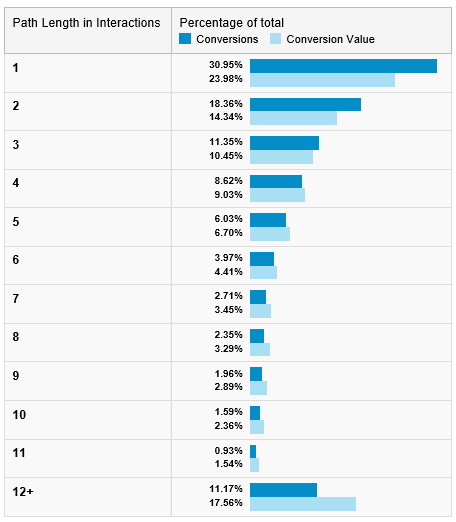
Fig. 1 – Number of sites visited before placing the order (source: enaA.com)
It is also interesting to see how much time passes from the moment someone visits an online store to them choosing an item and then completing the purchase by placing the item into the cart. A total of 43.06% of customers take the plunge on the same day, while 37.17% of customers make the final click after anywhere from 12 to 30 days. It seems that in this case too, the comparison of the share of purchases by value is inverted. The value of speedy purchases represents 36.2% of the total value of purchases, while the value of purchases made after 12 to 30 days accounts for 44.11% of the total value. It is safe to say that prior to purchasing a high-end product, we not only look at more websites but also allow ourselves more time to check out the offers at other online as well as brick and mortar stores. It is also true that it takes customers more than four days to place orders for above-average purchases (€160 at enaA.com).
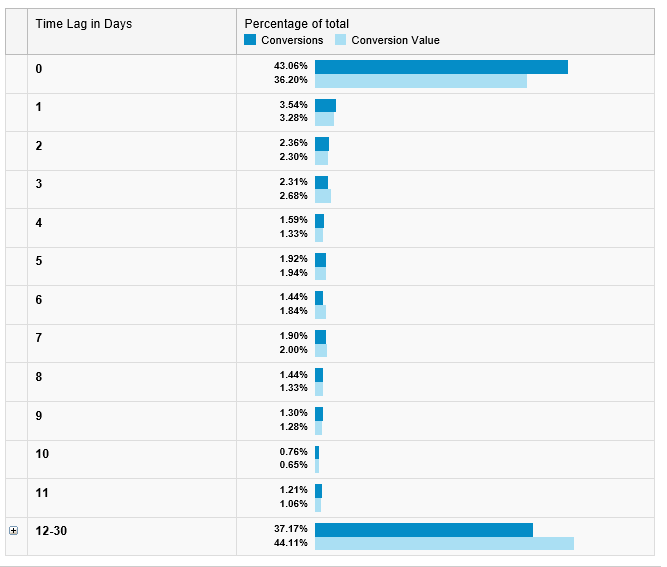
Fig. 2 – Time between the first visit and placing the product into the shopping cart (source: enaA.com)
But prudency does not end here. After placing the item in the cart, 72.07% of customers make the purchase immediately or on the very same day. However, it should not be ignored that 7.42% of customers make the actual purchase after 28 day or more. This, of course, includes our record-breaker of 16 months.
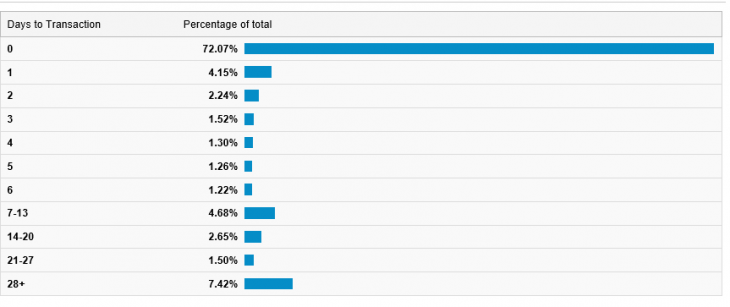
Fig. 3 – Days between placing the product into the cart and placing the order (source: enaA.com)
If your goal is to sell items faster or, better yet, to sell them in general, I suggest providing the customer with a detailed product description. The description should include everything a customer might be interested in. This will reduce their need to seek out further information on the product elsewhere. By doing so, they will be less likely to purchase the product that you are offering somewhere else. There’s nothing easier than offering a customer who has almost made up their mind to make the purchase at your online store a discount in the form of a personal conversation.
Whatever you do though, never treat online customers hastily.