How Slovenians Arrived in Silicon Valley

I spent the end of September in Silicon Valley. If the only thing you know about Google, Facebook, and Apple is that the first is a browser, the second a social network, and that the third makes smartphones and laptops, then you’re missing out. All these companies and a host of others are deeply involved in artificial intelligence, virtual reality, cars and more.
I left San Francisco airport and headed for San Jose by ordering an Uber. Uber cars have their own space at the airport where they pick up and drop off passengers, so as not to mingle with other taxi drivers. Even though traditional taxi drivers are on average almost twice as expensive, I think they still get at least ten times the number of passengers compared to Uber drivers. It stands to reason that only a small number of passengers, flying to Silicon Valley, actually have an Uber app on their smartphone, which is essential for calling one. Furthermore, I had the chance to see how traditional taxi drivers still dominated the space in front of the hotel and on the city roads. Uber is increasing its presence, but not nearly as fast as we would like to believe when we fret about taxi drivers losing their jobs overnight.
San Jose has transformed itself from a farming town into a global hub. Because the people wanted more. Because they wanted change.
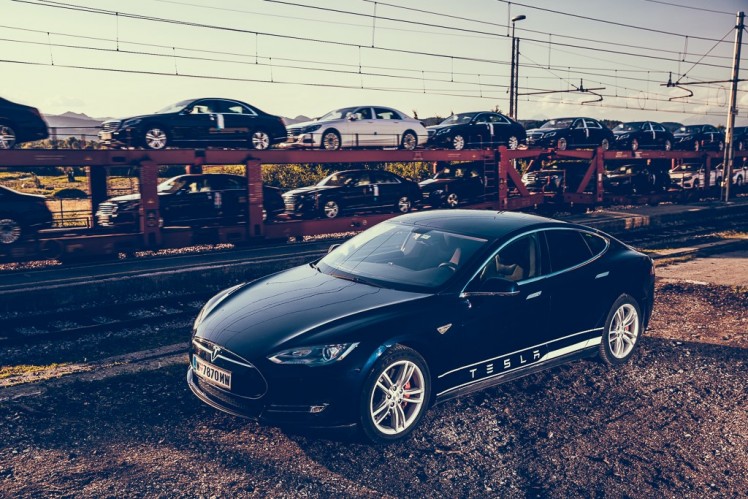
All the largest car manufacturers in the world are moving parts of their R&D departments to Silicon Valley. Even though self-driving cars are already on the roads and it seems electric motors have emerged as clear winners, this is only the beginning. Will we still be buying cars or will we prefer to rent them? Will self-driving electric cars really be the only vehicles left on the road? What will they be like? What do the customers of the future want? What kind of solutions can manufacturers offer? This is why Silicon Valley is abuzz. Everyone is looking for the best user experience and computer software to run the new cars. Even the Chinese have come here. In a major way. They are buying up enormous areas for their companies and for their testing grounds. They went all out and bought NASA’s hangers. It is clear they want to seize the opportunity and become the automotive superpower of the future, when petrol and diesel internal combustion engines will no longer dominate the roads.
The world is not only changed by new technologies, but also by each passing generation. Partially because they don’t particularly like the things their parents thought most important, and partially because of a sense of urgency. They need to be concerned with how they’ll live in 70 or 80 years; they know that if nothing changes, their future holds a planet covered in at least two meters of plastic bottles where water and air are only available on prescription. They are aware they need to improve the way they exploit natural resources, which is why they find sharing things, when they don’t need to own them, second nature. The sharing economy has also caught on in more conservative business ventures, such as lending office space. WeWork is aiming to lend out approximately a million workspaces around the world by the end of 2017. As of late 2014, they had spaces at 27 locations. By the end of 2015, the number rose to 54. They were even awarded the title Most Innovative Company of the Year. They are currently opening seven to eight new locations per month. Anyone who rents a space with them becomes a member of a club. People from various companies who lease workbenches from them, socialize and help one another. The incredible melting pot of freelancers, start-ups, and small-business owners is already being further expanded by employees from large companies, like Pepsi Cola and Samsung. They want their workers to learn the business culture of the new generations, find potential co-workers and business partners.
At the grand opening of the – for now – fully Slovenian-owned ABC Global Home company in San Jose, a representative of the city, who visited Maribor 24 years ago, also said a few words. Her duty back then was to teach us how to transition from socialism to a market economy. She was visibly happy about how far we’ve come, that we came to her country and her city, and that we in turn can do something for them. She took the fact that we made it as something for granted. She was no longer our teacher, instead welcoming us as equal partners. After all, when she was born, her native San Jose was also not much more than a farming town. Today, it is one of the ten largest cities in the US and the capital of Silicon Valley. The rapid growth of high tech companies and the development of the electronics industry turned it from a farming town into a global hub at the turn of the millennium.
Because the people wanted more. Because they wanted change. Because they invested themselves, their strength, visions, energy and passion. There’s nothing you can’t accomplish with that! With only that!
First published in MANAGER FINANCE 13.10.2016 http://manager.finance.si/8850122/Aljo%C5%A1a-Domijan-Kako-smo-Slovenci-pri%C5%A1li-v-Silicijevo-dolino
Photo: Igor Domijan, Aguatera
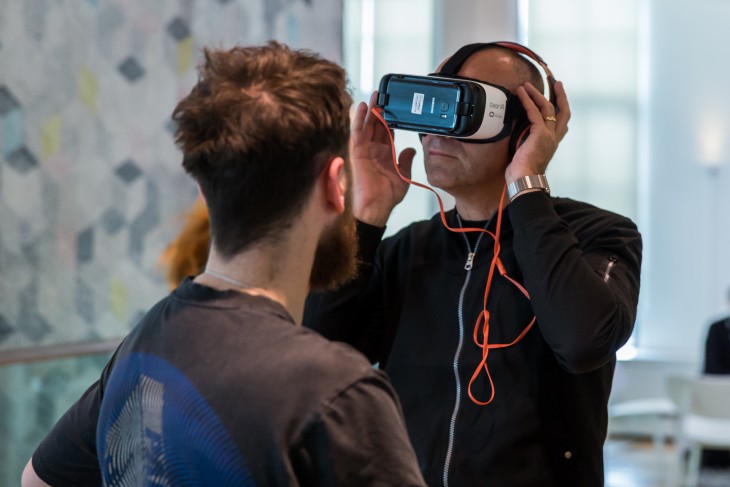
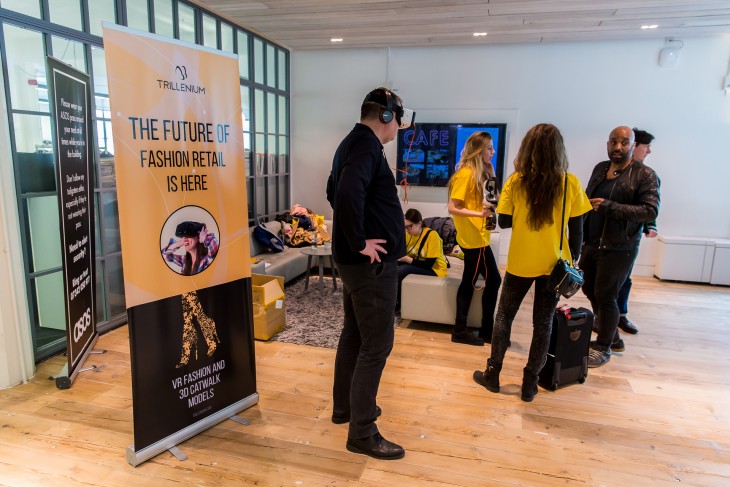
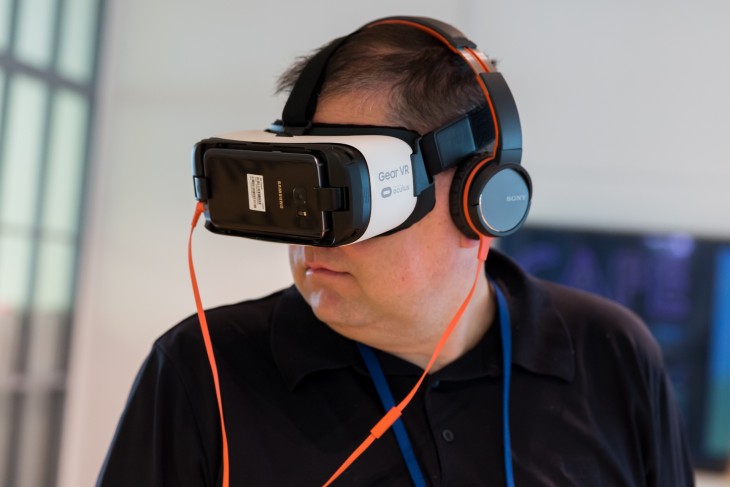
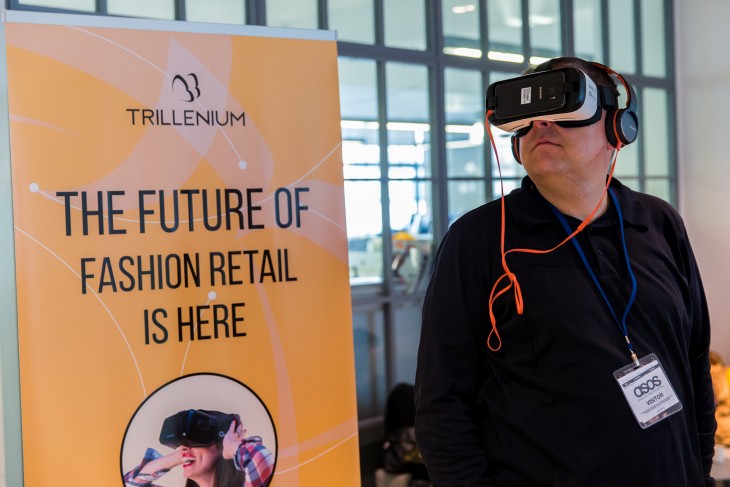
First steps in VR-commerce
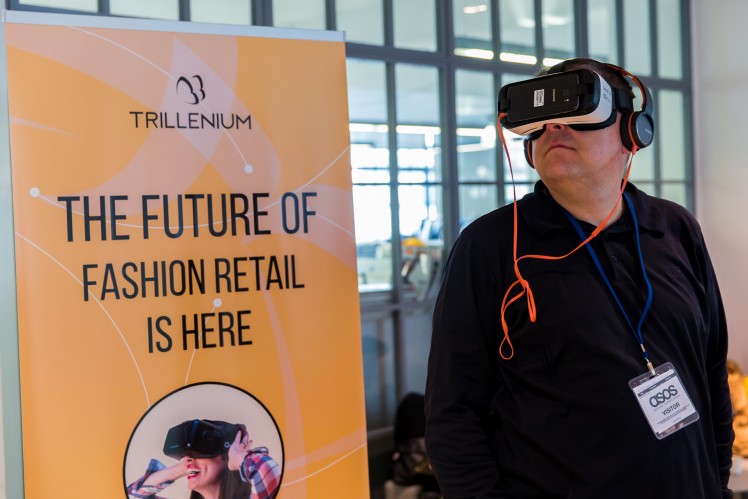
Excellent experience with Trillenium at Asos in London. VR is next big step in the way we will use our computers, smartphones. Glad to be at least small part of it.
When Food Waste Turns into a Global Business
When, a few months ago, I heard SmartFuturistic speak for the very first time, story immediately appealed to me. Too much food is being thrown away, and if this can be reduced, however slightly, using a mobile phone application (these are, after all, the only applications that are made nowadays), it is worth listening to the idea and, if need be, help out. Can it be turned into a business? Perhaps.
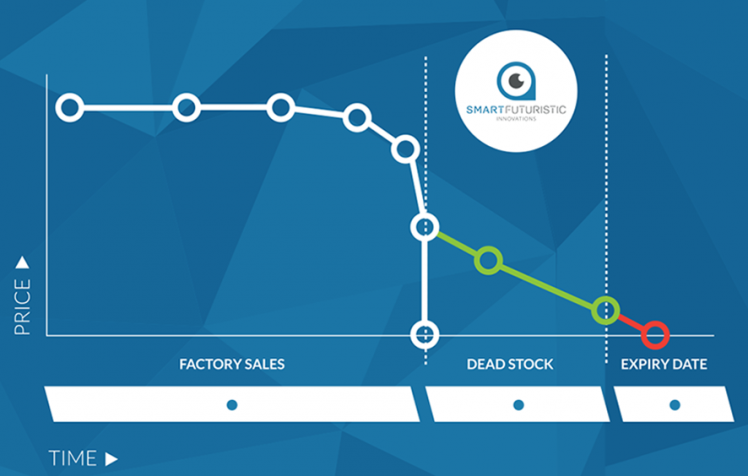
Instead of complaining about the fact that some sellers and producers waste up to 30% of food left on their shelves, SmartFuturistic thought about what they knew and what they could do to solve the problem. The solution is the smartFuturistic application that helps producers and retailers sell their stock. The closer the “best before” date, the harder it is to sell. And all that is left when the date expires is the cost of discarding the food.
This is where SmartFuturistic comes in: the new application allows producers to extend the time of sale, thereby reducing the possibility of having to throw the food away. The algorithm helps sellers find the appropriate buyers and, in the event of reaching a deal, the most appropriate means of transport. Though the application was initially meant to be a shortcut to selling to larger clients, such as schools, kindergartens, hospitals, hotels, zoos and similar enterprises and organisations, it quickly became apparent that the solution also establishes connections between sellers and buyers over greater distances. Using SmartFuturistic, a German company can, for instance, sell its excess beer to China.
At this point, everything goes into overdrive. The SmartFuturistic team becomes one of the first eight companies to receive funding from the business ABC Accelerator, develops at a blistering pace over a period of three months and draws the attention of a large number of international investors on the presentation day. Not even a fortnight later, they come in second at the TechCrunch start-up competition (more on http://techcrunch.com/2015/07/13/budapestcrunch-ii-was-a-great-success) in Budapest.
Thanks to their extensive know-how and excellent solution, the future is wide open for the enthusiastic, well-organised team of SmartFuturistic. Anyone thinking of making it in the business world would do well to remember that SmartFuturistic’s solution is coming on the market at the right time. (Timing is important!) Well, maybe a second too early, just enough to get ahead of the competition. Which never hurt anyone. But the fact is that the world wants and needs this solution. It does not need convincing. The United Nations have adopted a plan to cut food waste by half by 2030, thereby reducing the number of starving people around the world. A few weeks ago, France passed a law prohibiting supermarkets from throwing away food that is past its “best-before” date. But that is only part of the problem. A large portion of food rots in the fields. I am glad that this issue has become a topic of discussion among European politicians, with similar laws being drafted in other EU Members states as well. I am even more glad, however, that SmartFuturistic and their investors have recognised this as a business opportunity. That is the best guarantee for reducing food waste.
Banks are losing the payment transaction business

In a few years, payment transactions and trade will be completely different from what we are used to.
If you are not buying things online and are not aware of the unbelievable growth of online sales, or if paying with PayPal still seems like a novelty to you, then you are behind the times. You probably do not know that there are new online retail companies providing services which attract more and more payment transactions. Will you continue to read if I promise to list three new European service providers whose individual worth exceeds EUR 1 billion?
The breathtaking growth of areas including online sales, cloud technology and the standardisation of devices (which allows virtually the same software to run applications on smart phones, tablets, computers, POS terminals and other devices) has enabled new service providers to enter the market as soon as they spot an opportunity. This time we are not talking about the sort of enthusiast that the market has a hard time understanding and accepting. We are talking about unicorns. I am not being romantic – this is the actual name given to start-ups who quickly achieve a worth of EUR 1 billion or more. Their businesses are shamelessly large, but even so, in Europe we have at least three unicorns in this sector alone.
Doubling the Volume of Business Each Year
Adyen (www.adyen.com) provides a seamless solution for mobile, online and in-store transactions, which enables merchants to accept almost any type of payment anywhere in the world. The solution is used in the largest stores and kiosks as well. Having received a financial injection worth USD 250 million from General Atlantic, Index Ventures and Felicis Ventures in December 2014, the company’s worth has been assessed around EUR 1.4 billion.
Its Dutch founders, Pieter van der Does and Arnout Schuijff, like to emphasise that as of yet they are not considering selling their company. And why would they? They double the volume of their business each year. At the moment, the company operates in 187 countries and their services are used by 3,500 global service providers, including Facebook, Burberry and Spotify. They can wait a few more years and then retire with EUR 30–50 billion in their pockets.
A Business Larger than Alibaba
Powa (www.powa.com) is a British unicorn. In June 2014, the company bought their smaller competitor, the Hong Kong-based MPayMe, for USD 75 million and expanded their services in the field of mobile payments. Although the purchase price amounted to the company’s sales over 2.5 years, it has proven to be a worthwhile investment. Today, Powa is worth around EUR 2.5 billion. Dan Wagner likes to boast that his business is larger than Alibaba.
Powa combines mobile payment services with online commerce services. PowaWeb provides cloud-based commerce services. PowaPOS is an application that transforms a tablet or smart phone into a cash register. PowaTag provides a new payment solution which is used by more than 1,100 service providers worldwide. All of these services operate online, offline and in physical shops – from the smallest boutiques to the largest shopping centres.
Banks Cannot Compete
Owners of Skrill (www.skrill.com) were less patient and sold the company to the London-based Optimal Payments for “a mere” EUR 1.1 billion. Skrill is in charge of payment transactions on eBay, Bet365 and Skype. In contrast to its competitors, Powa and Adyen, the company also provides money transfer for their users and operates in other fields where there are plenty of other unicorns.
If I reveal that Powa employs only 500 people, it becomes clear that banks simply cannot compete with the new services provided by these companies – companies which bring a new approach, quality and, above all, lower costs. In a few years, payment transactions and trade will be completely different from what we are used to.