First steps in VR-commerce

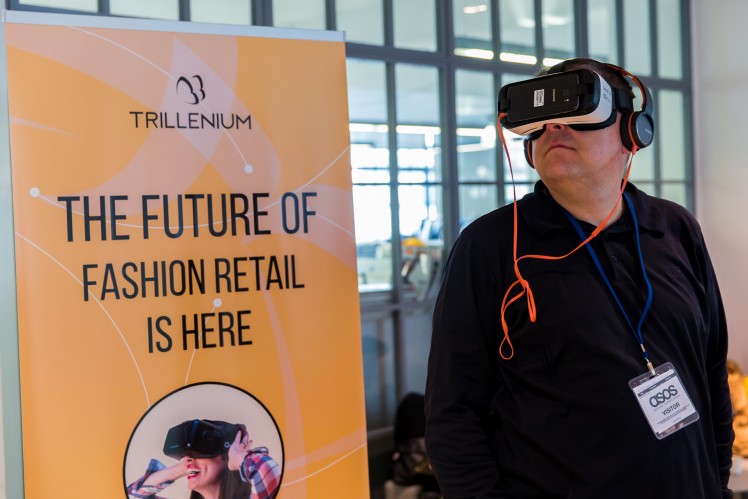
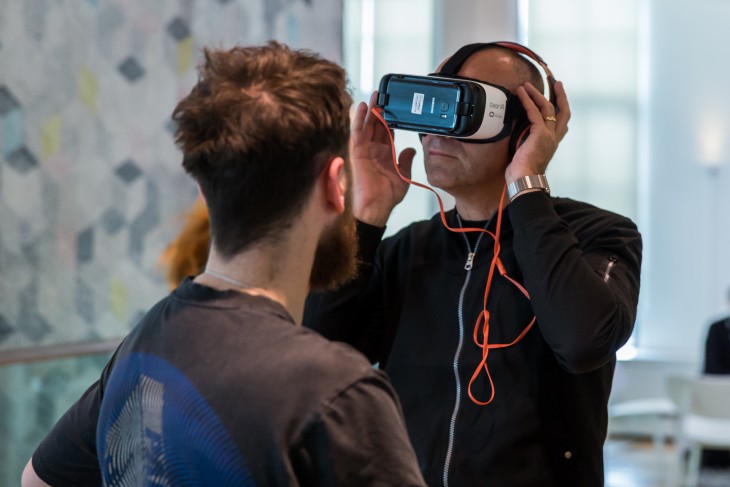
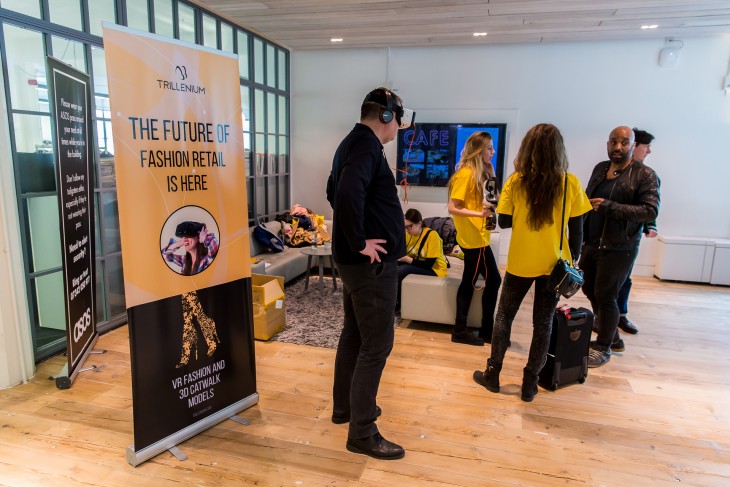
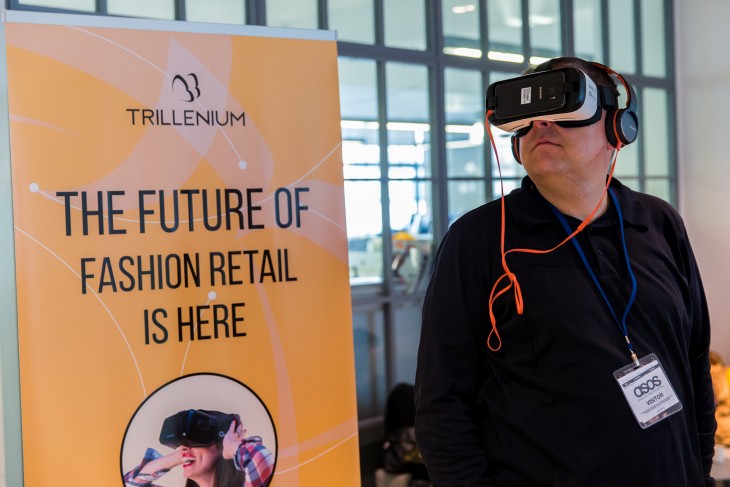
Excellent experience with Trillenium at Asos in London. VR is next big step in the way we will use our computers, smartphones. Glad to be at least small part of it.



How to Successfully Sell Online after Google changed

If your sales figures mainly depend on Google, Facebook, and various advertising networks, you’ve hit a dead end. Even if an average 2% of clicks end up converted to sales (not a bad result), taking into account an average price of $ 0.15 per click (also not a bad price), the cost of advertising with Google amounts to $ 7.5 per purchase. If this was the price to pay just once for a regular customer, guaranteed to buy more, you’d still be able to stay in the black. However, you will have to pay $ 7,5 for each purchase coming from Google forever. Customers are creatures of habit. The next time the majority of customers will again start their sales journey on Google. If your ad is not there this time round.
After Google changed the positions of ads and is now more advertising panel than search engine. On mobile phones whole first screen is reserved for ads. On PC’s and laptops users now see four ads first and only two to three search engine results.

Ok. Thank’s Google. It is even more clear now how to actually successfully sell online. Just take next three steps forwards as soon as possible:
1. Calculate the actual success rate of your existing Google advertising campaigns, as well as other services where you might be paying for clicks or impressions (price comparison sites, for example are even less effective than Google), making sure the sales you generate with their help let benefits go to your pockets and not theirs. Think about whether it’s worth it in the long run!
2. Ensure your offer has the best possible content. This is a mantra repeated time and time again by all SEOs and inbound marketing experts. However, never put too much stock into how many times your keyword is written in the meta tag. What you need is a truly excellent description of your offer. It needs to be a real pleasure to read, telling buyers everything there is to know about your offer and convincing them to make a purchase. You should additionally ensure a short summary which is visible when a link to your page is published on Google, Facebook, etc. And that’s it. Believe me, if you don’t know the best description for your offer, no inbound or SEO expert can help you.
3. Instead of paying for clicks and impressions, start by only paying an adequate share of the realized sales to those who help you generate a larger number of purchases. Use performance marketing! You can find on affiliatewindow.com all top brands are using it.
Alternatively, you can post your offer in the largest online stores on the Internet:
a. Amazon.com
b. Alibaba.com
c. Ebay.com
d. enaA.com
What matters most in selling online?
At Amazon.com you can buy just about anything. Still, it is public secret t that 80% of their sales are generated from products that are sold exclusively at Amazon. Never mind the fact that the company is the leading online retailer boasting the largest customer base, a quick website featuring detailed descriptions and contents, an excellent user interface and so on. Just look at the prices of any of the technical products and you will get the picture. It’s the price. The main obstacle is the high price.
Being the only provider of a certain item and offering your products only at a website such as Amazon.com, you can achieve great sales results. Having come to the same conclusion, many Americans and other vendors rely on just one website such as Alibaba.com, eBay.com or Amazon.com or, alternatively, just a handful of online stores to sell their products.
Do you want to know why this is a good thing?
Manufacturers who dominate classic sales channels have an interest that their products take up as much of the sales’ area in as many stores as possible. Some opt for a smaller number of intermediaries who meet certain criteria to assist them in this process, but regardless whether they decide to set up an intensive or selective sales’ path, they are always on the lookout for more intermediaries. In certain fields exclusivity is rare. Buyers are looking for providers offering the best deals, but retailers can maintain different prices on account of their personal approach and special bonuses without being in direct competition with each other, even though they are only a block or two apart.
The internet on the other hand is a very different animal. The internet is about transparency; it is also about a unique mix of indirect and direct sales. It’s a whole new model. The manufacturer or provider can offer their product or service directly to the shopper, albeit indirectly via an online service such as Amazon.com or enaA.com, but this does not diminish the fact that this is a direct selling technique. More often than not, products are delivered from the manufacturer’s warehouse. That makes sense – it’s practical, quick and cheap. The warranty and after-sales customer support have to be provided by the manufacturer and its servicing network. Ultimately, the product price is also determined by the manufacturer itself. In short, the online retailer is an intermediary, whose role is much smaller than in classic sales, giving the impression that the shopper and the manufacturer communicate without any intermediary at all.
Why I advise against copying classic sales’ paths and applying them online?
Manufacturers who go down this path and offer their products in countless online stores are faced with the issue of price management. Online stores are not several miles apart, but only a few clicks. Shoppers can thus easily find stores that offer the same product for a lower price. And distance doesn’t matter; the store can even be abroad.
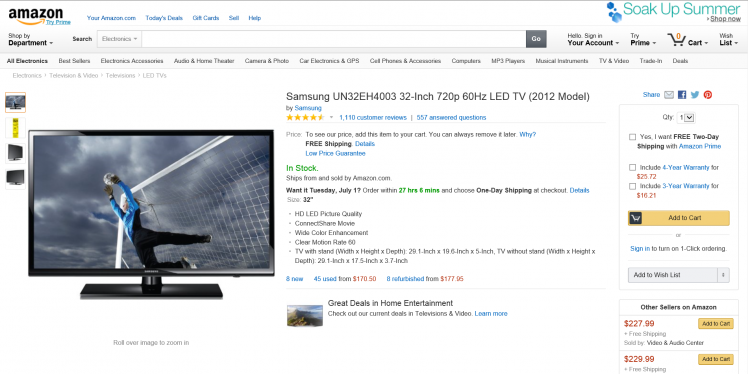
Now let us take a look how this works in practice. The Samsung UN32EH4003 television set is listed at Amazon.com without a price. Instead, it says “To see our price, add this item to your cart.” The shopper can only see the price after adding the product to the cart where it says that their price is lower than Samsung’s recommended retail price, so Samsung does not want it to be public.
If you think that the two retail giants Amazon and Samsung have adopted a successful sales model and that this approach is a good idea, I suggest googling “UN32EH4003”. You will get hits for this TV at samsung.com, amazon.com, digitaltrends.com, walmart.com, bestbuy.com, cnet.com, ebay.com, electronicexpress.com and conns.com. Each site displays a different price. Samsung doesn’t control anything; it just limits sales via online retailers who are big enough to be controlled.
Which one of these platforms will end up selling the TV? The one with the fastest and more flexible service, and with the lowest price point. This is why you will not find this TV among the bestsellers at Amazon.com.
Similarly, Google doesn’t favour the offerings of the same product at various websites with an identical photo and descriptions. For the browser, this is just a copy of one and the same site, and is therefore punished by a lower rating. If someone looks up LCD TVs, those pages will not be among the top hits, I am sure of it. Now you have another reason why it is better to be the direct retailer online.
However, even though Samsung and other similar retailers did not adapt to the new situation, smaller American business saw their chance in selling their products and services exclusively via Amazon – with great results.
Example from Slovenia, Europe: enaA.com offers you the Samsung 32H4000 with the lowest price guarantee.
Kdor obljublja službe, laže

Po najnovejših podatkih internet uporablja približno 2,5 milijarde ljudi. Večina, kar 1,7 milijarde, jih živi v Aziji, več kot 600 milijonov na Kitajskem. Najbolje spletno omrežena mesta na svetu so v Južni Koreji in na Japonskem.
V ZDA je »samo« 250 milijonov uporabnikov. V Braziliji skoraj toliko kot na Japonskem, okrog sto milijonov. Na splet je priključenih več kot 8,7 milijarde naprav – več, kot je ljudi.
Zato, da ta navidezni svet deluje, potrebujemo čisto konkretnih 37 milijonov kilovatov električne moči. V času, ko zaradi avtomatizacije, robotizacije in informatizacije izginjajo tradicionalni poklici, je prav splet edini prostor, v katerem se ustvarjajo nove potrebe, ki ženejo gospodarski razvoj. Realne ali navidezne potrebe, mar ni bilo vedno vseeno?
Nizka povprečna starost
Med državami z največjim številom uporabnikov spleta najdemo najbogatejše države, ki se lahko pohvalijo z izredno velikim deležem uporabnikov med prebivalci: ZDA, Japonsko, Nemčijo, Veliko Britanijo in Francijo, največji Kitajsko in Indijo, v redu, tudi Rusijo, potem pa, presenečenje, Nigerijo, ki ima 56 milijonov uporabnikov spleta, več kot Velika Britanija. Tik pod vrhom sledijo Mehika (44 milijonov), Južna Koreja, Indonezija, Filipini, Egipt, Vietnam, Turčija, Pakistan (35 milijonov).
In vse te države imajo eno skupno značilnost – nizko povprečno starost prebivalstva: Nigerija 15,2 leta, Pakistan 21, Filipini 22,7, Egipt 24, Mehika 26,7, Vietnam 27,4, Indonezija 27,9, Turčija 28,1 leta. Ko otroci v teh državah odrastejo, bo svet njihov in tak, kot si ga želijo sami.
Če pogledam še največje – Kitajska 35,2 leta, Brazilija 30 in Indija 25,9 leta -, se vprašam, kaj jim lahko Slovenija, ki je s povprečno starostjo prebivalstva 42,1 leta v družbi najstarejših (opazno odstopa le še Monako z 48,9 leta), sploh ponudi.
S čim se ukvarjamo mi
Sredi tektonskih generacijskih, tehnoloških in kulturnih premikov se mi ukvarjamo s tem, kako bomo varčevalcem stare LB iz BiH in Hrvaške vrnili denar z obrestmi, ki jih NLB itak ni zaslužila, saj je v tem času delala zgubo, ter z iskanjem ministra za gospodarstvo, gradbeniki pa pričakujejo, da bo vlada uresničila njihov načrt oživitve slovenskega gradbeništva in odprla 20 tisoč novih delovnih mest. Za koga pa bodo zidali, če nas je vse manj? In kje bodo našli 20 tisoč mladih, ki jih bo tako delo zanimalo?
Ali res živimo na istem planetu?
Na mojem planetu nove generacije prinašajo spremembe. Če ne verjamete, da lahko na spremembe vplivajo mladi Nigerijci, ne pozabite na mlade v najrazvitejših državah. Z novimi navadami, ki ne ustrezajo tradicionalnemu porabniškemu vzorcu, se srečujeta celo digitalna velikana (in veterana) Amazon in Apple.
Težave Amazona in Appla
Amazonu prodaja knjig ne raste več po pričakovanjih. Kupci jih ne želijo več kupovati, raje si izposojajo. In to jim je omogočil prav Amazon sam. S tem so se sicer želeli pripraviti na pričakovane spremembe, presenetilo pa jih je, kako hitro se je sprememba zgodila.
Tudi Applov poslovni model temelji na tem, da prepričuje kupce, naj kupujejo stvari. A zakaj bi kupil glasbeni album na iTunes, če je zaradi razvoja interneta pravzaprav čisto vseeno, ali ga imaš na računalniku, v oblaku, na iTunes ali pa na prijateljevem Facebook zidu. In če ga poslušaš le enkrat, zakaj bi ga kupil? Prodaja glasbe prek iTunes je letos že upadla za 13 do 14 odstotkov.
Ekonomija delitve
Vse hitreje se širi tudi ekonomija delitve (sharing economy). Razumljivo, da se tak¬sisti na vse pretege upirajo širitvi Uber.com, saj jim ta odžira posel. Sprašujejo se, zakaj bi plačevali visoke davke in licence za opravljanje svoje dejavnosti, če jih mesta in države ne zaščitijo pred precej cenejšimi Uberjevimi prevozi.
A tako kot je konec šestdesetih let prihod avtomatskih pralnih strojev spravil perice ob delo, danes aplikacije, ki povezujejo pametne telefone in GPS, precej učinkoviteje povezujejo povpraševanje in ponudbo ter omogočajo najti prazno prevozno sredstvo hitreje in, seveda, ceneje.
Prazne hiše, parkirani avtomobili
Airbnb.com mi omogoča rezervacijo apartmaja, sobe ali hiše mimo hotelskih verig. Mladi se za nove načine ne odločajo samo zaradi osebnega varčevanja, temveč tudi zato, ker s tem varujejo planet. Viri so omejeni in želijo jih čim bolje izkoristiti. Zakaj graditi prazne hiše, ki čakajo na goste, ali delati avtomobile, ki večino svoje življenjske dobe stojijo na parkirišču. V tem duhu nastaja tudi vse več spletnih strani, ki omogočajo izposojo vrtalnih strojev, orodja, kosilnic, gra¬-belj… med sosedi. Strani, kot so Neighborgoods.net, Street¬bank.com ali Justshareit.com, ljudem obenem omogočajo tudi nove načine medsebojnega spoznavanja in druženja.
Internet vzemimo resneje
Tam zunaj prihajajo na trg nove milijarde ljudi s potrebami in pričakovanji, ki jih niti ne poskušamo razumeti. To je trg, ki raste. Ali lahko 42-letnemu Slovencu res uspe tako, da bo gradil hiše 21-letnim Pakistancem? Ali pa je že skrajni čas, da tudi pri nas internet in vse okrog njega vzamemo resneje in poskrbimo, da bodo naši otroci znali ustvariti nove potrebe v svetu, ki nastaja, in s tem tudi nova delovna mesta? Drugih ni. Kdor obljublja spet več služb, ki jih že poznamo, laže.
Prvič objavljeno 27.11.2014 na http://www.finance.si/8813484/Kdor-obljublja-slu%C5%BEbe-la%C5%BEe